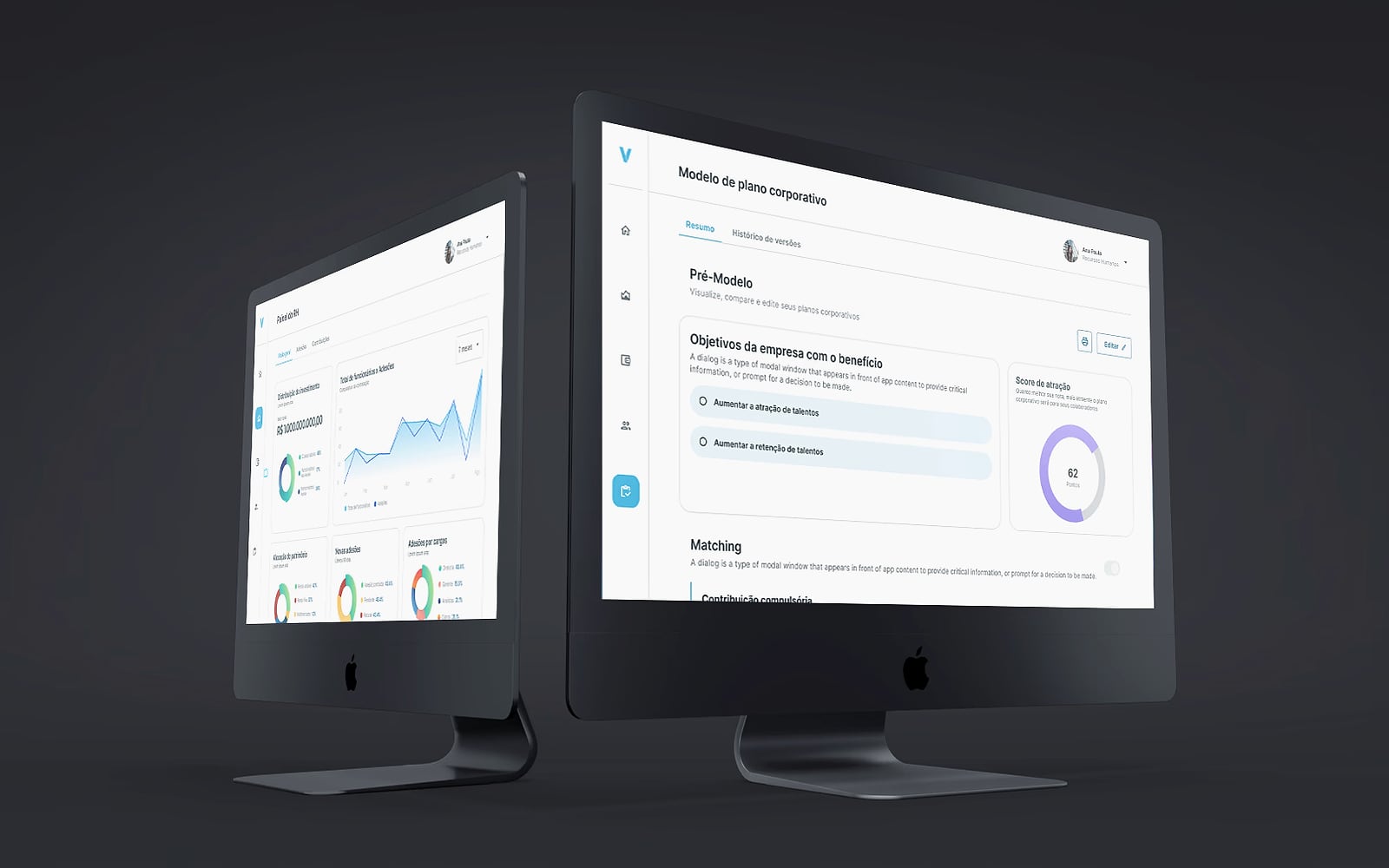
Two platforms, one product: B2B pensions for HR and brokers
Launched two tailored B2B pension experiences in three months, guided by 100+ research insights.
Vinci Retirement Services · 2022 · User research, Workshop facilitation, Interaction design, UI design
The problem
Vinci was entering corporate pensions late, with seasoned specialists but no user-facing platform. They asked us to build one. The complication: the platform had two B2B audiences with almost nothing in common.
HR specialists at corporations needed to administer pension plans for hundreds or thousands of employees — invoice reconciliation, plan changes, new-hire enrollment. Insurance brokers needed to sell new pension plans to corporations — configure proposals, run scenarios, close deals.
The needs ran deeper than feature lists. Brokers needed to streamline pension plan customisation for each client, reducing back-and-forth rounds of adjustments, and improve sales efficiency so they could focus on relationship-building rather than paperwork. HR specialists needed to simplify payroll management, automate invoice reconciliation to cut manual error, and access clear data about employee contributions and plan performance so they could track strategy effectiveness and guide new employees to informed decisions.
The same product, used by both groups, would have failed both. We argued for two platforms on a shared data foundation, and the work followed.
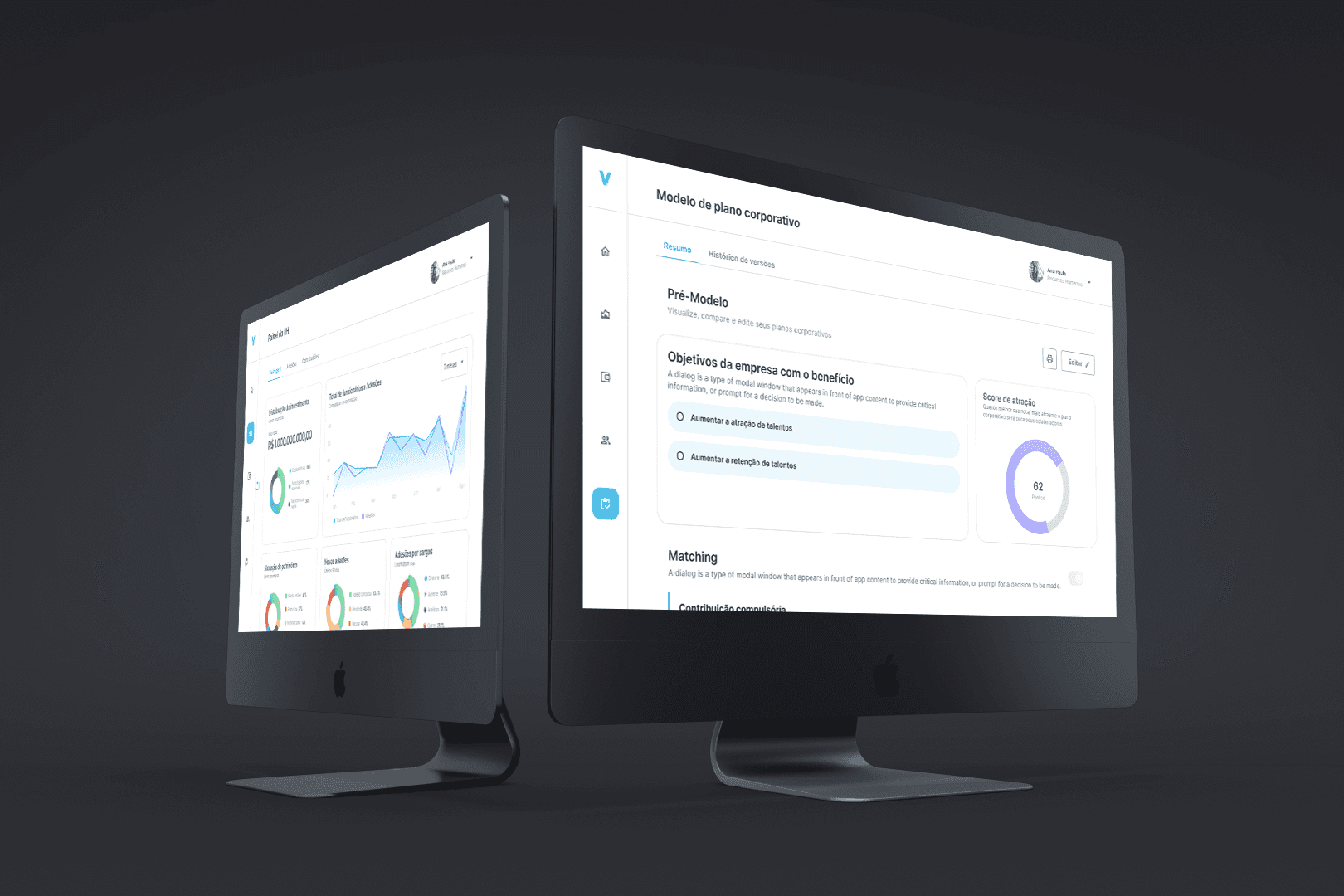
Initial concept mockup for the dual-platform approach — broker and HR surfaces on a shared data foundation.
How we worked
Competitor analysis as a hypothesis generator, not a feature list
We started with a thorough scan of existing corporate pension platforms — not to copy them, but to understand what assumptions the market had already made. That gave us a structured set of hypotheses to test in user research, rather than walking in with an empty notebook.
In-depth interviews with both audiences
Two HR specialists, five insurance brokers, structured against the hypotheses. We caught a real risk early: the client wanted heavy involvement in selecting and briefing participants. We mitigated through monitoring, intervention protocols, and post-interview cross-checks. The research yielded 100+ specific insights — enough to ground priority decisions, not enough to hide behind.
From the interviews, a clearer picture of each audience’s core jobs emerged. Brokers needed to streamline pension plan customisation and increase sales efficiency, supported by a transparent compensation structure. HR specialists needed to simplify payroll management, automate invoice reconciliation, and access clear, actionable data about contributions and plan performance.
Lean Inception, with rewrites
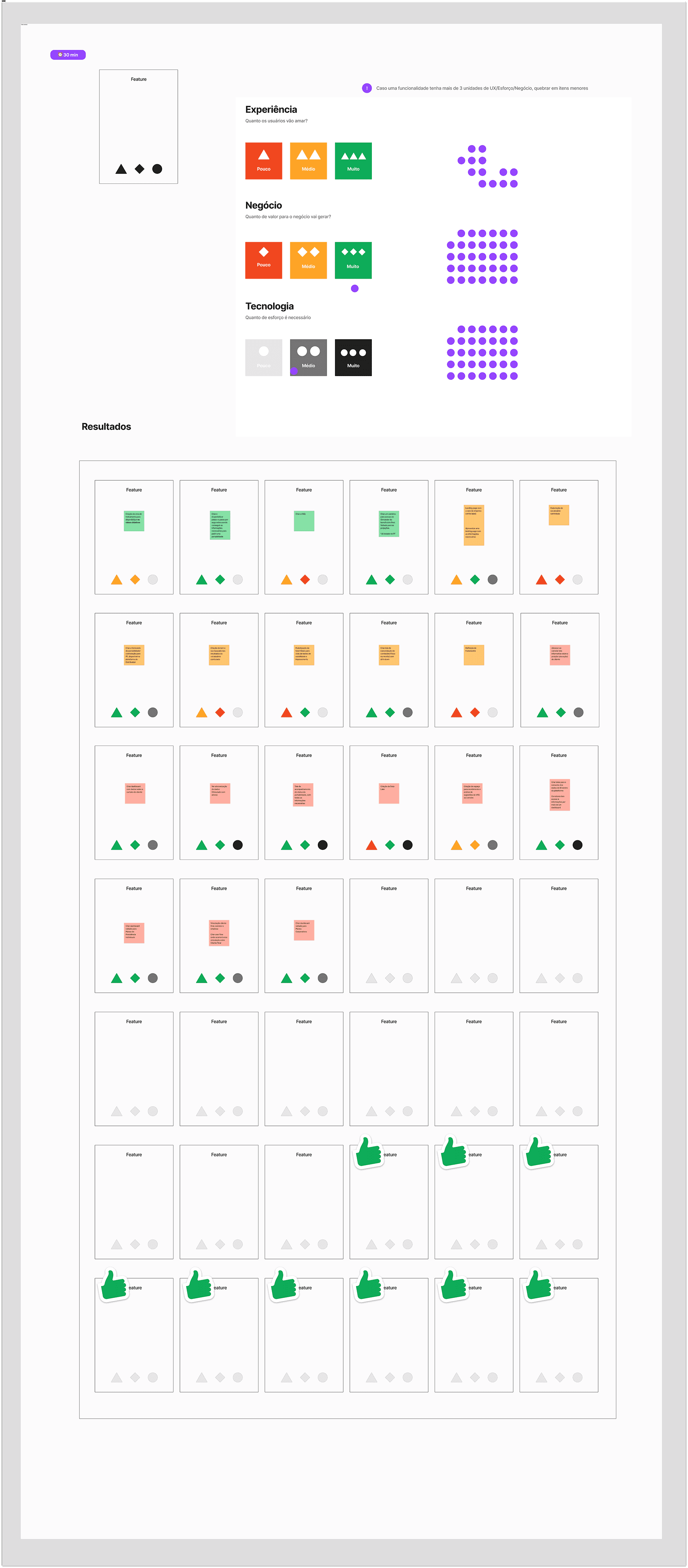
We facilitated a Lean Inception workshop with stakeholders to agree on scope. The product manager was new to UX-style user stories and wrote them as technical specifications. We rewrote them twice — both times tightening the focus on user motivation and outcome, not implementation detail.
Two surfaces, one source of truth
The dual-platform decision came out of the workshop, not the design phase. We built mind maps for each audience’s flows, validated them in show-and-tell sessions with stakeholders, and refined screen-by-screen. Each iteration was small enough to discuss and adjust in one session.
Mind maps and screen-by-screen iteration
To ground the design in the workshop output, we started each flow with collaborative mind maps — visual canvases that mapped functionality, user flows, and potential roadblocks for each screen. These became our shared reference with the product owner and stakeholders.
Rather than presenting polished full-page designs, we showed individual screens and functionalities in rapid cycles. This “show, discuss, refine” loop demystified concepts for stakeholders, fuelled real-time feedback, and strengthened buy-in before we invested in full compositions.
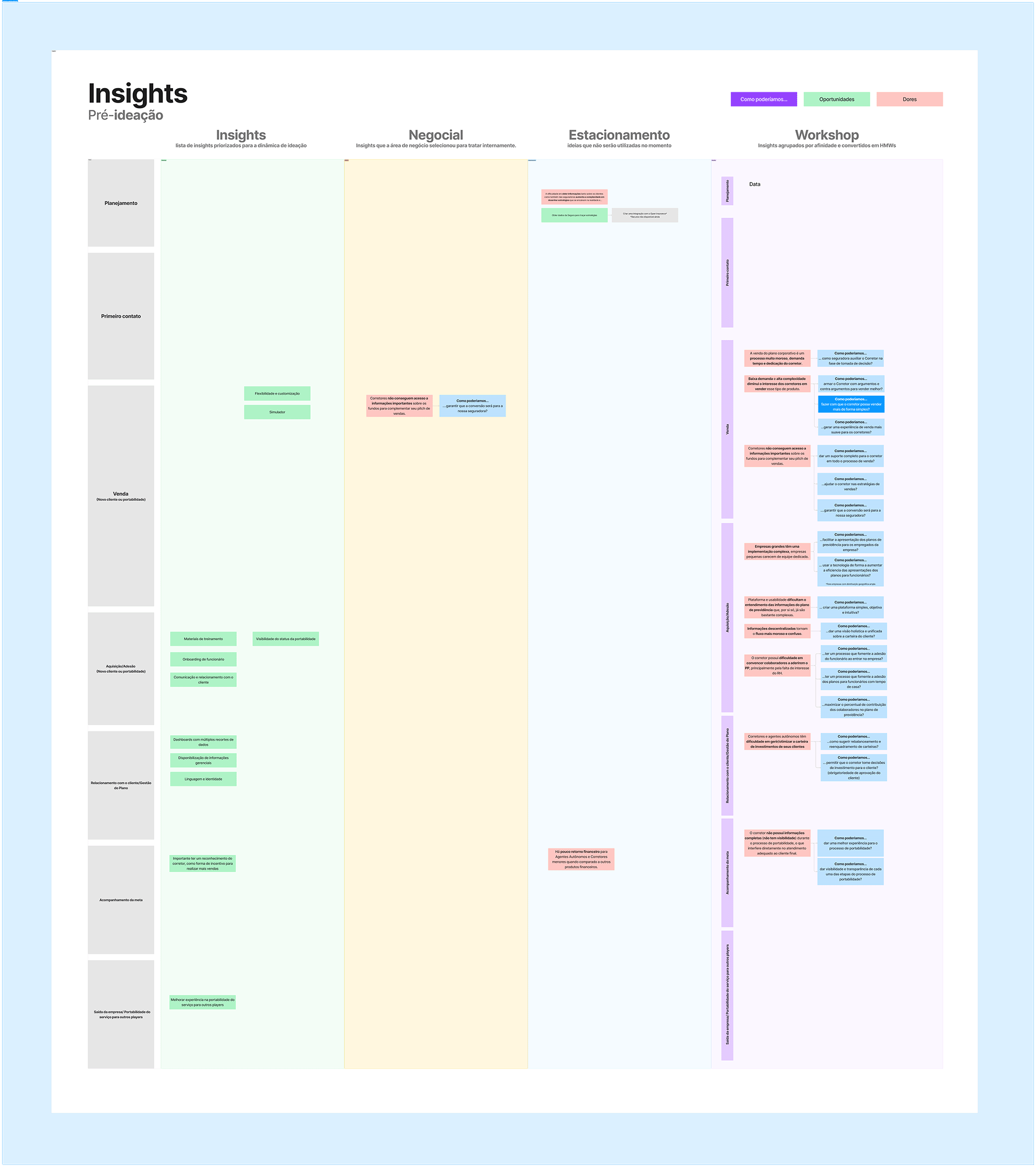
Mind maps mapping system requirements and user flows per screen — used as a shared reference with the product owner.
For brokers, we iterated on a modular pension plan simulator that streamlined customisation and accelerated the sales cycle. For HR, we focused on intuitive data dashboards that simplified invoice reconciliation and employee contribution management.
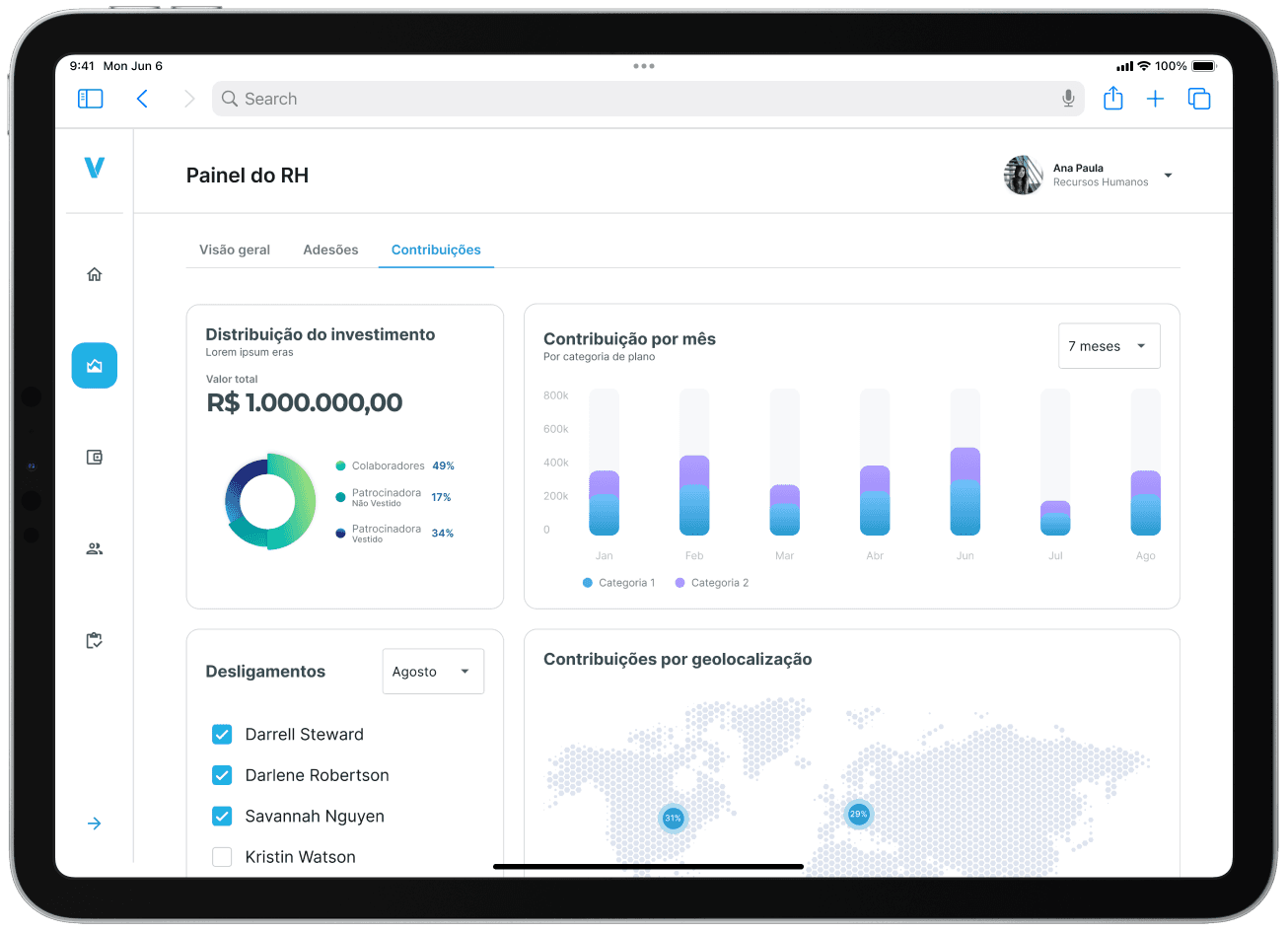
Broker platform screen — modular pension plan configuration.
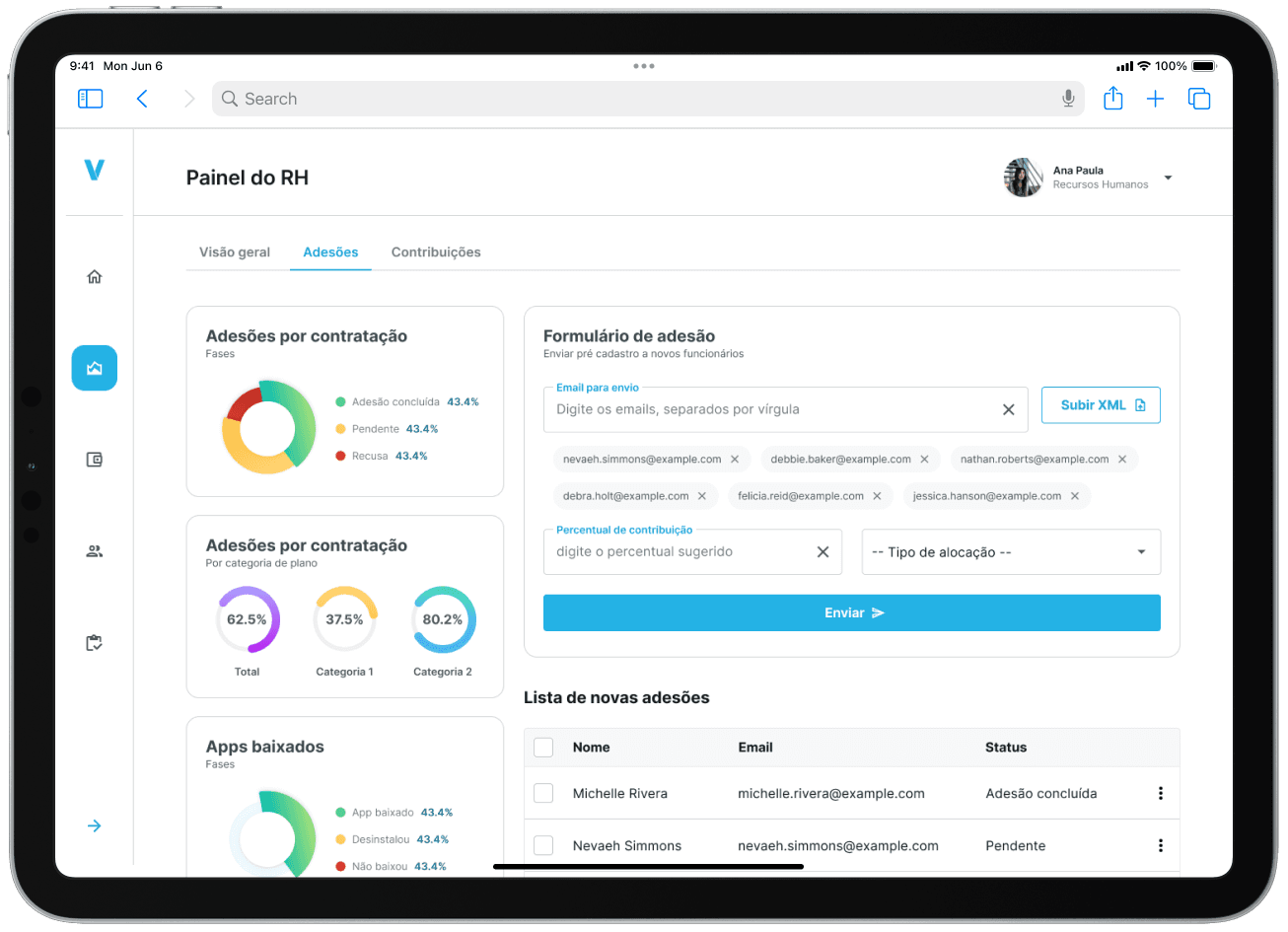
HR platform screen — employee contribution overview and plan management.
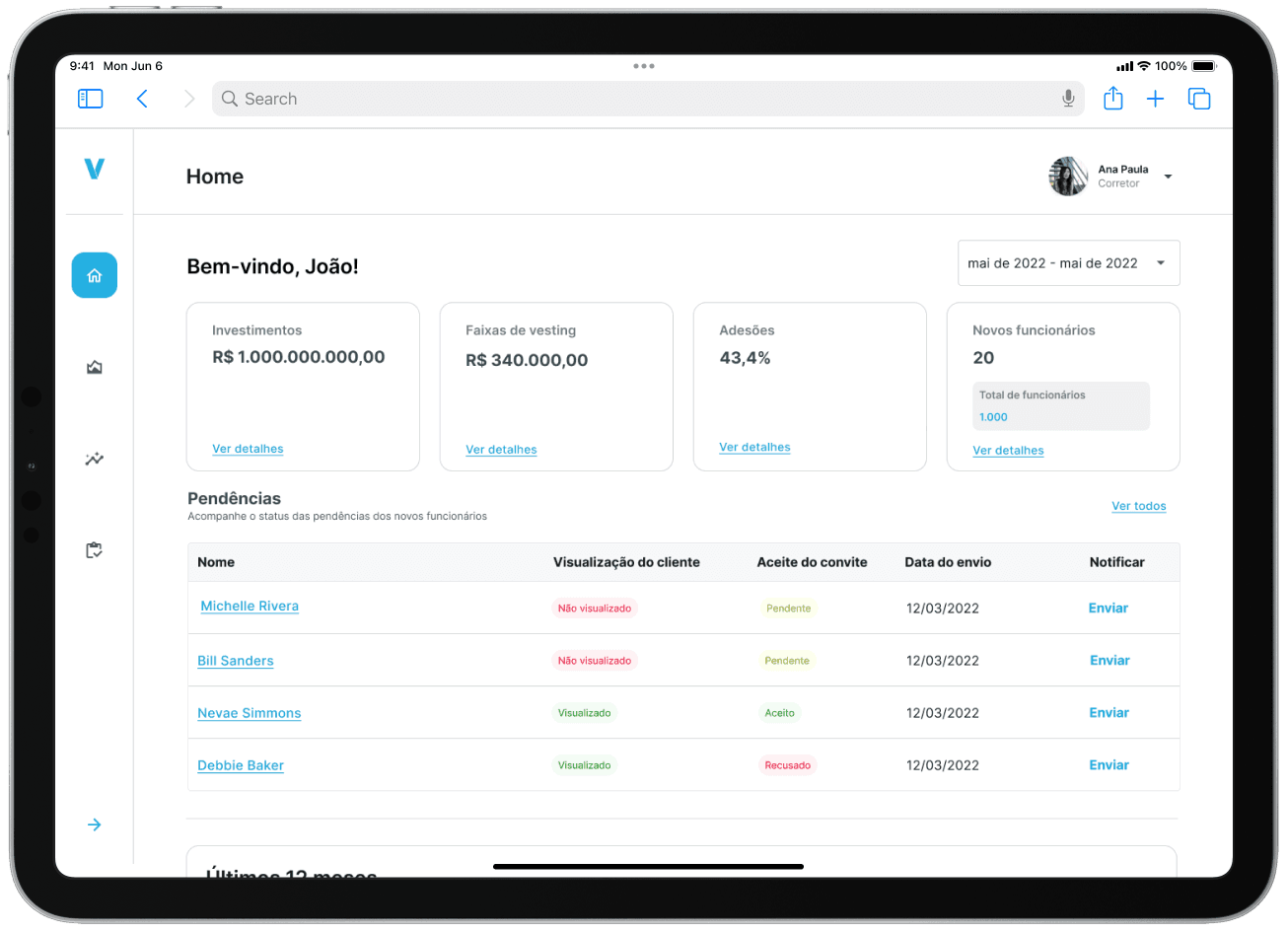
Shared analytics dashboard — cross-platform data visualization layer.
Key decisions
01
Built two platforms instead of one configurable product
Why HR and brokers had non-overlapping primary tasks. A configurable single product would have pleased neither and shipped slower.
Trade-off Two products to design, build, and maintain. We managed the cost by sharing the data layer and the design system — the surfaces diverge, the foundations don't.
02
Rewrote the product manager's user stories twice to refocus on user motivation
Why Stories written as 'system shall do X' produce features. Stories written as 'user is trying to Y, because Z' produce outcomes. The team needed to learn the second pattern, not just be handed it.
Trade-off Slowed early planning. Saved much more time downstream when stories drove decisions instead of just describing them.
03
Treated stakeholder involvement in research as a risk to manage, not avoid
Why The client wanted access to participant selection. Refusing would have damaged the relationship. Accepting without protocol would have biased the data.
Trade-off More work designing and running the protocol. Worth it — we kept the data clean and the client engaged.
Key artifacts
Design artifacts
Audience split decision model
AnonymizedDecision artifact comparing one configurable product versus two dedicated surfaces for HR and brokers.
Research synthesis board
NDA-safeClustered insights from interviews with HR specialists and brokers, used to prioritize MVP scope.
Dual-platform IA map
Redacted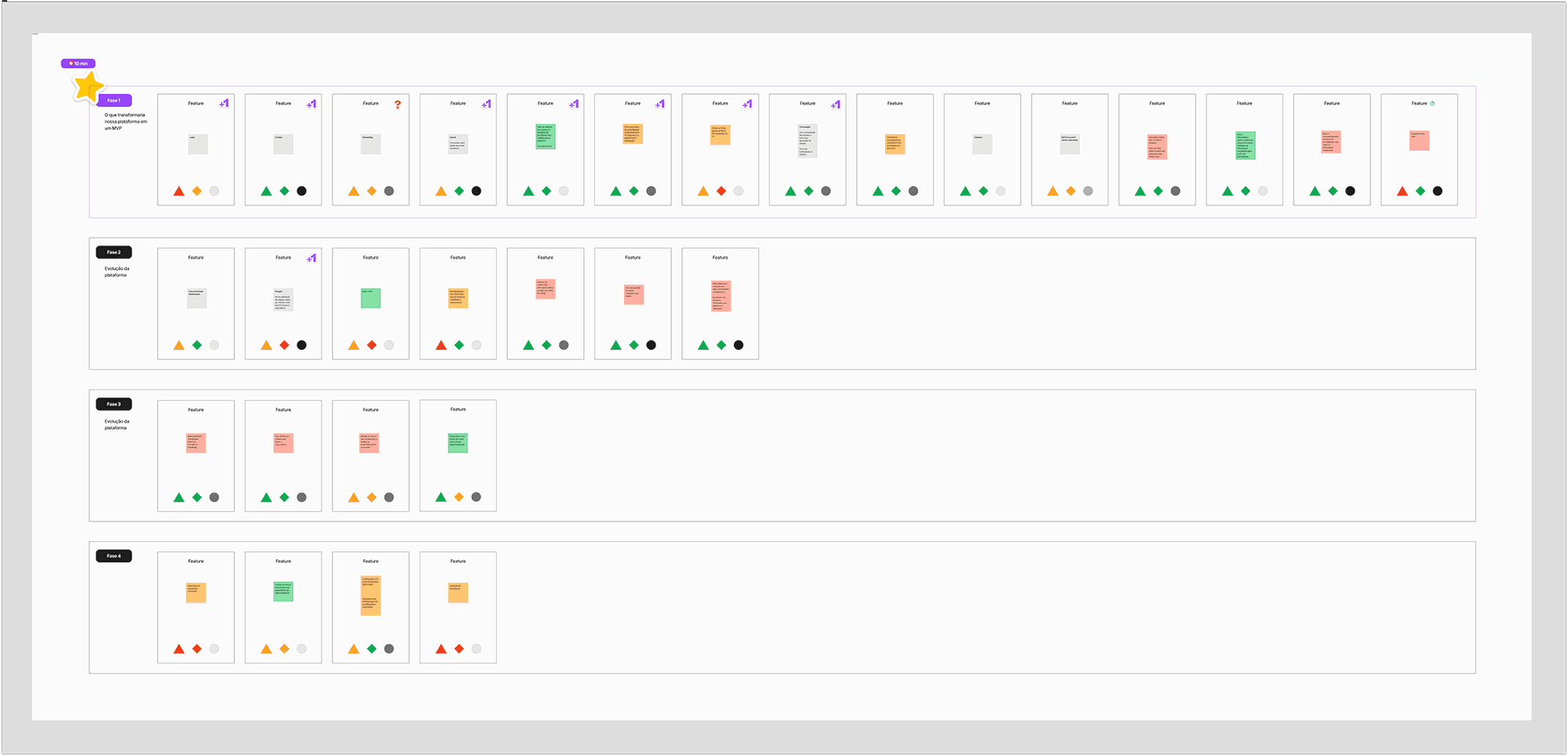
Information architecture mapping shared data foundations and audience-specific interaction layers.
Outcomes
Within three months, we shipped two user-tested platforms on a shared data layer.
For insurance brokers, the modular pension plan simulator became their primary tool. Customisation that previously took multiple rounds of back-and-forth could now be configured in a single session. The interface reduced administrative overhead and let brokers focus on closing deals.
For HR specialists, invoice reconciliation shifted from a manual, error-prone process to a streamlined workflow. Clear dashboards replaced spreadsheet hunting, and employee plan changes became self-service actions rather than ticket-driven requests.
Outcome
Two purpose-built surfaces shipped in three months on a single data foundation
2
distinct platforms: broker sales + HR administration
100+
research insights anchoring every priority call
3 mo
from first workshop to validated dual launch
Broker platform dashboard — plan configuration and sales pipeline view.
HR platform — full-page view of employee management and contribution tracking.
Looking back
The thing I’d do differently: get the product manager into the user research sessions earlier. By the time she rewrote the user stories the second time, she’d internalized the audiences enough to write them well. Pulling her into interviews from the start would have saved a rewrite — and probably caught a few priority calls we made twice.